One of the first questions business leaders ask before investing in search engine optimization is: how long does SEO take to work? The answer depends on your website’s current condition, the competitiveness of your market, the quality of your content, and how quickly your team implements improvements.
SEO isn't an overnight growth channel. It requires technical improvements, useful content, authority building, and consistent measurement before it can deliver sustainable results. Some businesses begin seeing early signs of progress within a few months, while meaningful gains in organic traffic, qualified leads, and revenue may take six to twelve months or longer.
The goal is to understand whether SEO is building a reliable source of visibility, attracting the right audience, and contributing to business growth. This guide explains what a realistic SEO timeline looks like, which factors influence it, and how to recognize progress before traffic and conversions increase.
How long does SEO take to work?
The timeline varies according to your website, competition, resources, and the work required. SEO typically takes three to six months to show meaningful early progress, while stronger and more consistent results can take six to twelve months or longer. However, this is a planning estimate, not a guaranteed deadline.
Some SEO improvements may take effect within days, while others can take several months to show results. Search engines need time to discover, crawl, index, and reassess updated pages. Competition also influences how difficult it's to earn prominent positions.
For example, a company with an established website, useful content, and a few technical issues may see improvements sooner than a new business competing for highly competitive keywords.
It's important to distinguish between making an SEO change and seeing its business impact. A page might get indexed within weeks, begin ranking for relevant searches later, and generate qualified leads only after it attracts the right visitors.
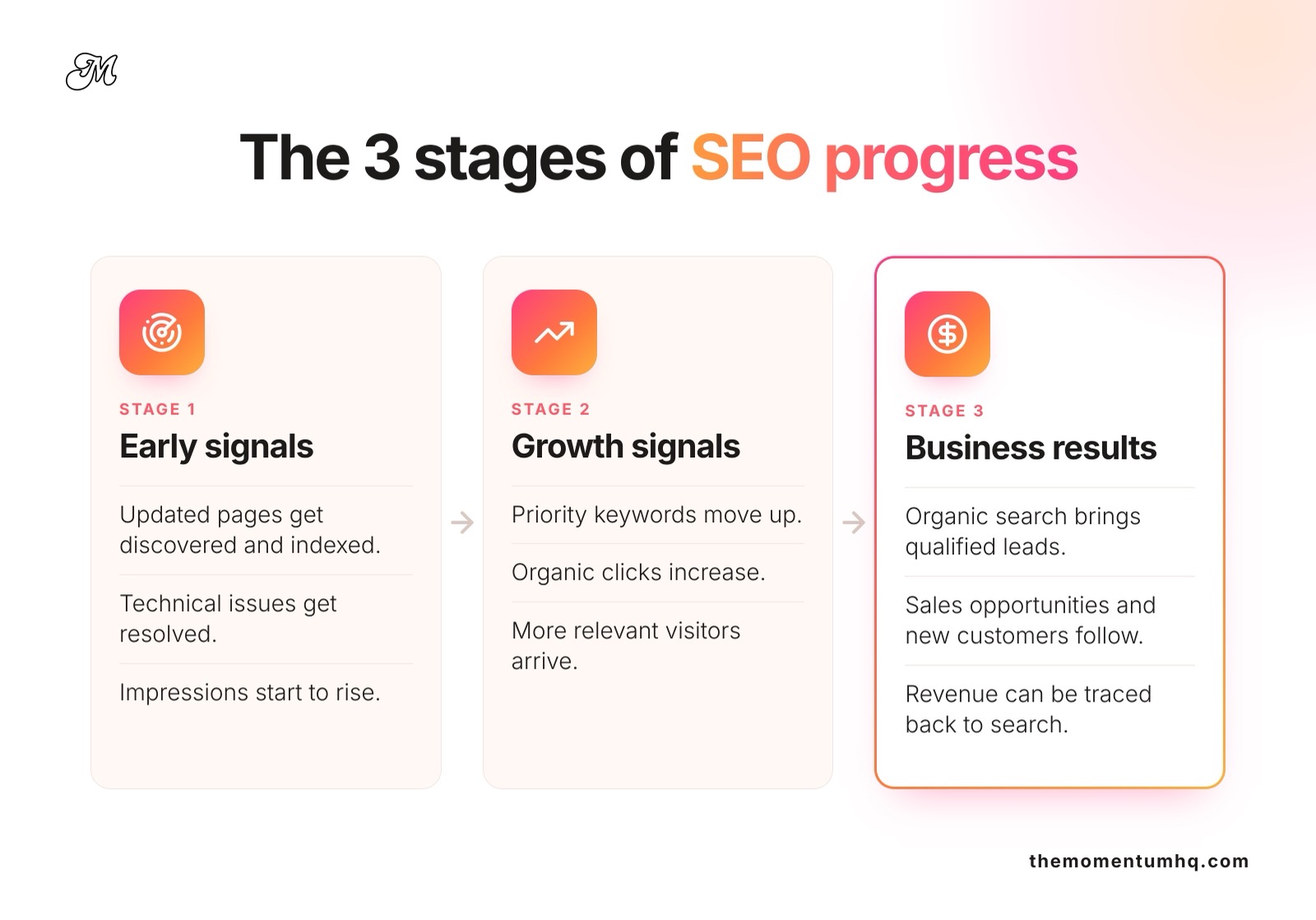
For business leaders, SEO progress should be evaluated across three stages:
- Early signals: Search engines discover updated pages, technical issues are resolved, and impressions begin to increase
- Growth signals: Important keywords improve in rankings, organic clicks rise, and more relevant visitors reach the website
- Business results: Organic search contributes to qualified leads, sales opportunities, customer acquisition, and revenue
These stages do not always happen in a straight line. Some pages may perform well early, while others need further refinement. The key is to measure progress consistently instead of expecting every keyword to rank on a fixed schedule.
What does SEO progress look like month by month?
SEO progress generally moves from research and technical improvements to stronger search visibility and, eventually, business outcomes. Here’s a practical framework for planning and reporting, although some websites may progress faster or slower:
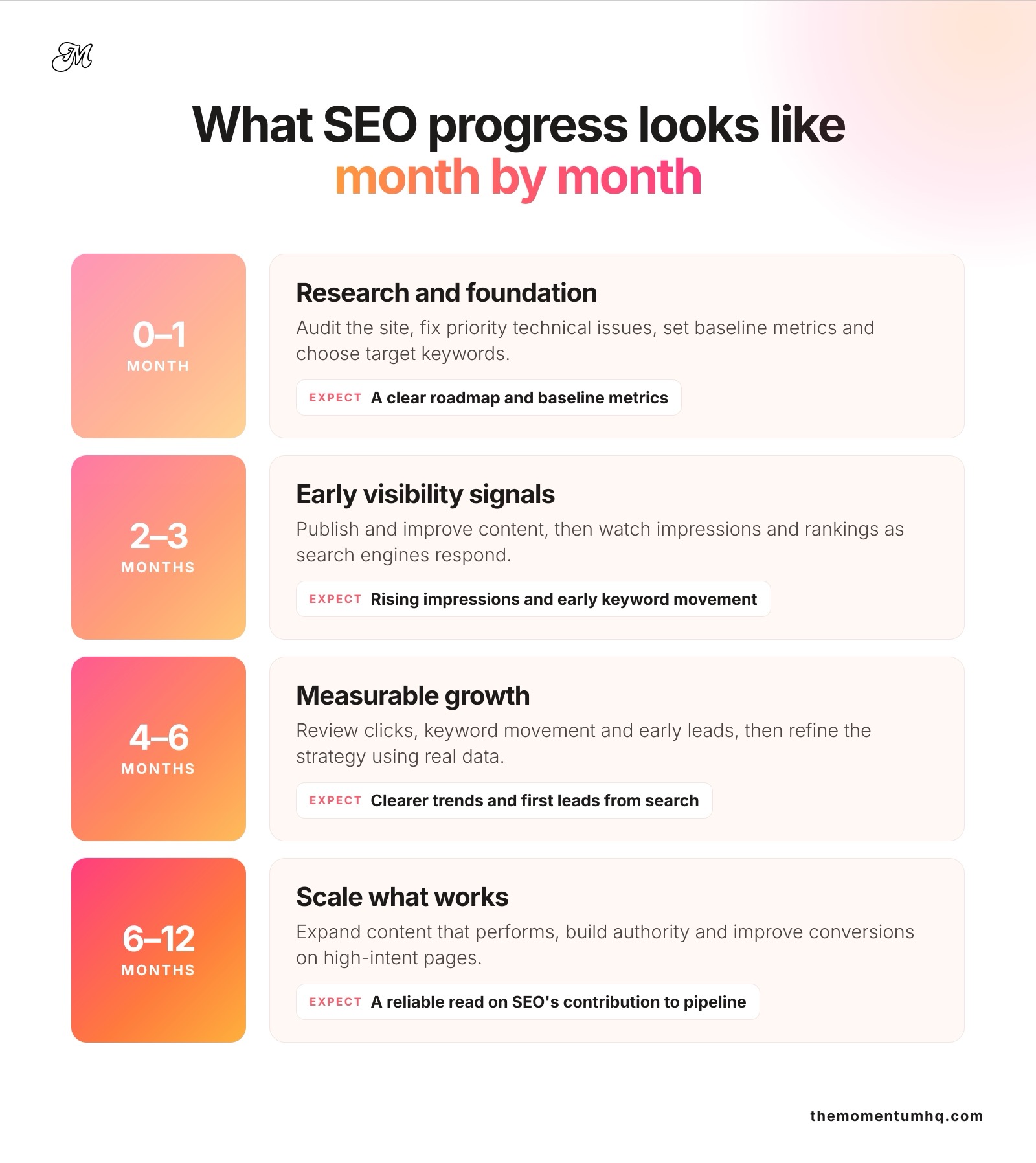
0–1 month
The first month is usually about understanding the website and establishing a solid SEO foundation. Rather than expecting an immediate traffic increase, your team should focus on identifying the issues and opportunities that will shape the strategy.
Typical activities include:
- Conducting a technical SEO and content audit
- Reviewing existing rankings, organic traffic, and conversions
- Researching relevant keywords and customer search intent
- Identifying indexing, crawling, and internal linking issues
- Improving important page titles, headings, and content
- Establishing reporting dashboards and baseline performance
For example, a B2B software company might discover that several important service pages are poorly linked internally or do not address the questions potential buyers ask. Correcting these issues creates a stronger foundation for future growth.
A clear roadmap, prioritized fixes, baseline metrics, and evidence that the SEO program is being implemented. Some technical improvements may show early effects, but substantial business results are unlikely to be a reliable expectation at this stage.
2–3 months
During months two and three, the focus shifts toward implementing the strategy and monitoring early search visibility. Search engines may begin responding to technical fixes and content improvements, although rankings can fluctuate.
Your team may start seeing:
- More pages discovered or indexed appropriately
- Increases in search impressions for relevant queries
- Early movement in keyword positions
- Better visibility for specific long-tail keywords
- Improved engagement on updated landing pages
Therefore, leadership should expect evidence of implementation, early visibility changes, and initial insights into which topics and pages deserve more attention. A lack of substantial traffic growth doesn't automatically mean the strategy is failing.
4–6 months
Months four through six are often when an established SEO campaign starts producing clearer performance trends. If the website has a reasonable foundation and the team consistently implements improvements, more target keywords may gain visibility and organic clicks may begin increasing.
At this stage, the team should examine:
- Changes in organic clicks and impressions
- Rankings for commercially relevant keywords
- Traffic to priority service and product pages
- Leads, enquiries, or purchases from organic search
- Content that attracts relevant visitors but needs conversion improvements
For example, a packaging supplier may notice that pages targeting specific packaging products are attracting more organic visitors. The next step is to determine whether those visitors are requesting quotes, exploring product options, or leaving without taking action.
Learning the difference matters because higher traffic is useful only when it supports the business objectives. A clearer picture of what is working, where performance is improving, and which opportunities could generate stronger commercial results.
6–12 months
Between six and twelve months, a consistent SEO strategy may begin delivering more meaningful and measurable business value. Successful pages can continue gaining visibility, established content can attract links and engagement, and the website can build stronger relevance around important topics.
Depending on the market and implementation quality, businesses may experience:
- More consistent organic traffic growth
- Stronger rankings across relevant keyword groups
- Increased visibility for high-intent searches
- More qualified enquiries and sales opportunities
- Better returns from content that continues attracting visitors over time
SEO still requires ongoing work after this stage. Competitors publish new content, search systems evolve, and business priorities change.
What should leadership expect? A more reliable basis for assessing SEO's contribution to pipeline and revenue, identifying profitable opportunities, and deciding where additional investment makes sense. Results are not guaranteed at the twelve-month mark, so decisions should remain grounded in performance data.
What factors affect how long SEO takes?
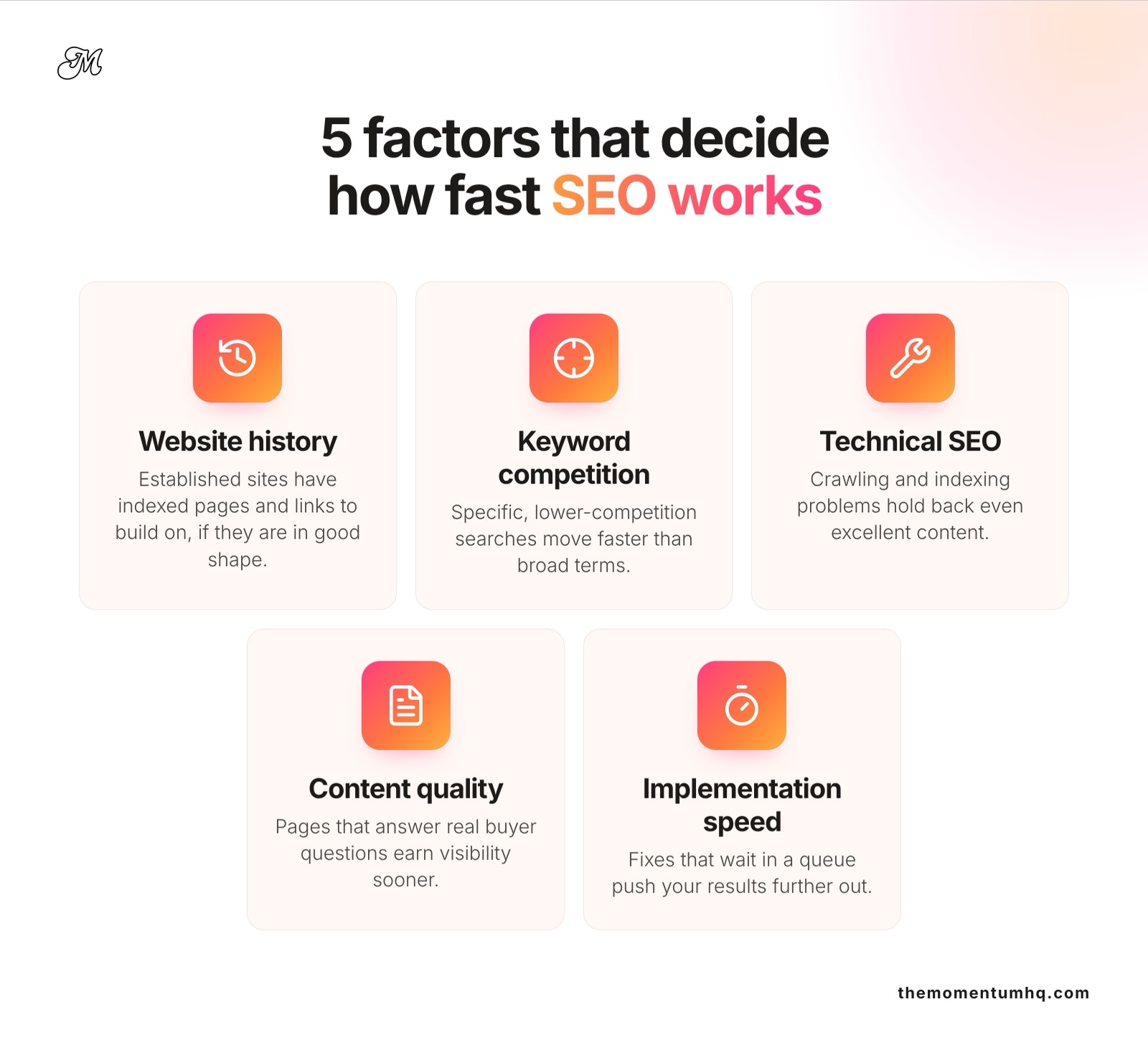
SEO timelines vary because search engines evaluate websites within a competitive environment. Two companies can target similar keywords and invest comparable budgets but experience different results because their websites, content, resources, and implementation processes are not the same.
Here are the factors you want to keep your eyes on:
Website's history
A website's history influences how much foundational work is needed before SEO improvements can gain traction. An established website may already have indexed pages, relevant backlinks, brand recognition, and content that attracts organic visitors. A new website usually needs to build these assets from scratch.
However, an older domain doesn't automatically perform better. If an established website has outdated content, indexing problems, poor internal linking, or a history of low-quality SEO practices, it may need significant improvements before gaining visibility.
Keyword competition
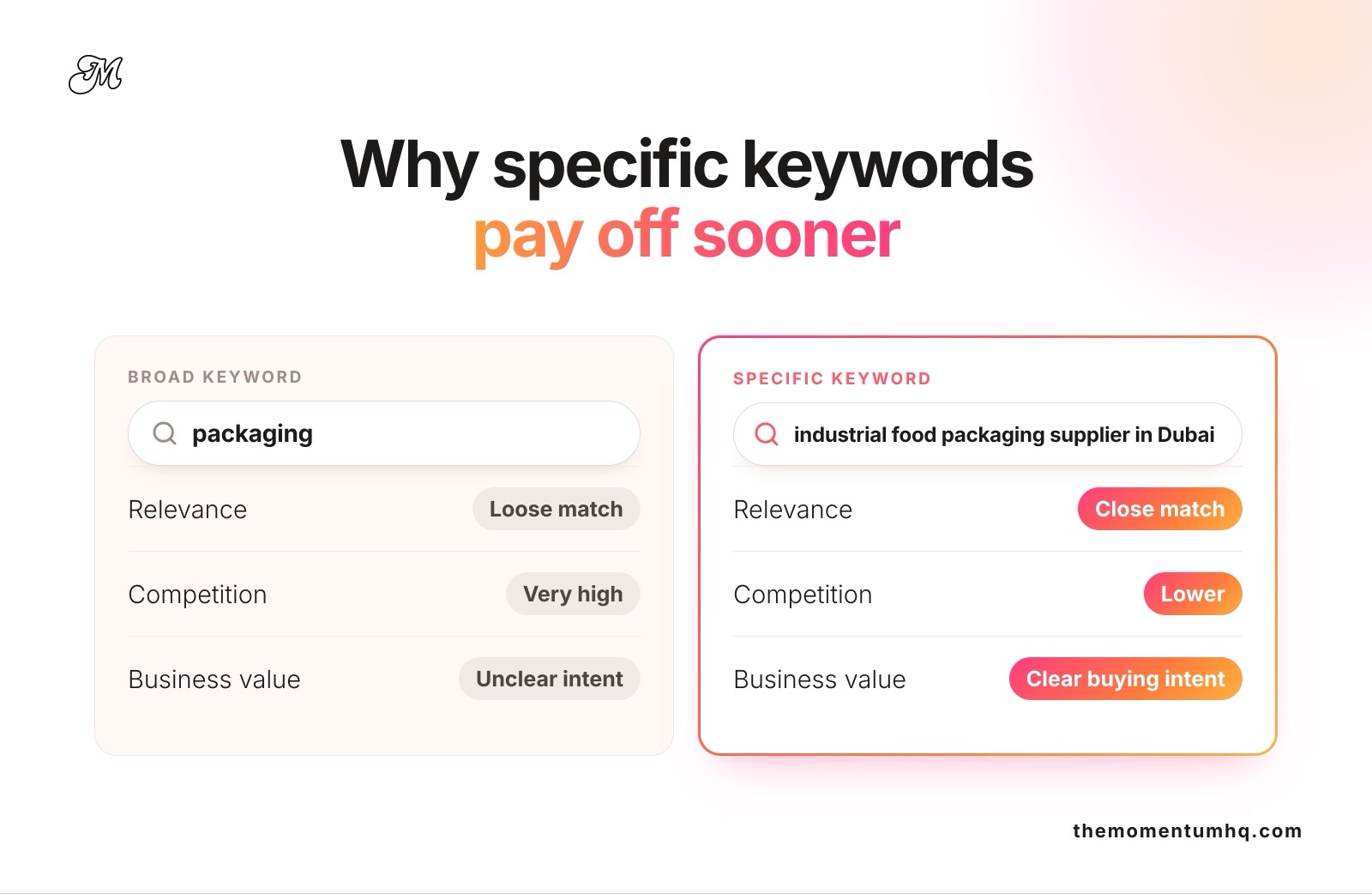
The keywords you target can significantly affect the time required to see results. Specific, lower-competition searches may offer earlier opportunities than broad terms targeted by established brands with extensive content and strong authority.
For example, ranking for “industrial food packaging supplier in Dubai” may be more achievable for a relevant business than competing for the broad term “packaging.” The more specific phrase may also attract visitors with clearer purchasing intent.
A strong keyword strategy balances three factors:
- Relevance: Does the keyword match your products, services, and audience?
- Competition: How strong are the pages already ranking for it?
- Business value: Could visitors searching for this term become qualified leads or customers?
The goal here is to prioritize realistic opportunities that contribute to business objectives while building toward more competitive keywords.
Technical SEO
Technical SEO issues can delay progress by making it harder for search engines to discover, crawl, index, or understand important pages. Even excellent content may struggle to perform if search engines cannot access it properly.
Common issues include broken internal links, incorrect canonical tags, accidental noindex directives, duplicate pages, slow or unstable page experiences, and confusing site architecture. A technical audit should therefore prioritize problems according to their likely impact on important pages. Fixing critical issues early can remove barriers.
Content quality
Content quality affects whether your pages deserve to appear for the searches you want to target. Publishing more articles doesn't guarantee better results if those articles repeat existing information or fail to answer customer questions.
Effective SEO content addresses search intent, explains relevant topics clearly, demonstrates expertise, and helps readers make informed decisions. For business websites, it should also connect information to the products, services, or solutions the company offers.
Content updates also take time to produce results. Pages may need the following before their performance approves:
- Clearer structure
- Stronger evidence
- Better internal links
- More precise focus
Consistently publishing and improving useful content creates more opportunities to earn relevant search visibility.
Implementation speed
An SEO strategy can be well researched and still underperform if recommended changes are not implemented. Delays in development, content approvals, stakeholder reviews, and website updates can push results further into the future.
For example, an SEO team may identify important technical issues in the first month, but if the development team cannot implement fixes until month four, the website loses valuable time. Similarly, a content strategy cannot generate its intended benefits if articles remain unpublished.
You should treat implementation as part of the SEO investment, not as an administrative detail. SEO timelines depend not only on what your strategy recommends but also on how quickly and consistently your organization puts it into practice.
How can you tell whether SEO is working before traffic grows?
You can assess SEO progress before organic traffic increases by monitoring whether important pages are being indexed, impressions are rising, relevant keywords are improving, and technical problems are being resolved.
Three tools can help your team track progress:
- Google Search Console: Monitor search impressions, clicks, click-through rates, average positions, and indexing issues. Increasing impressions can indicate that your pages are appearing for more relevant searches, even before clicks rise.
- Google Analytics 4 (GA4): Track organic landing-page engagement, key events, form submissions, and purchases. This helps connect search traffic with visitor behavior and conversions
- Semrush: Track target keyword rankings, visibility trends, competitors, and keyword opportunities. Use these insights to understand whether your priority pages are gaining ground
These tools are most useful when their metrics are connected to a clear business objective. Compare trends over time, account for seasonality, and record when significant changes were implemented.
How can you improve SEO results without cutting corners?
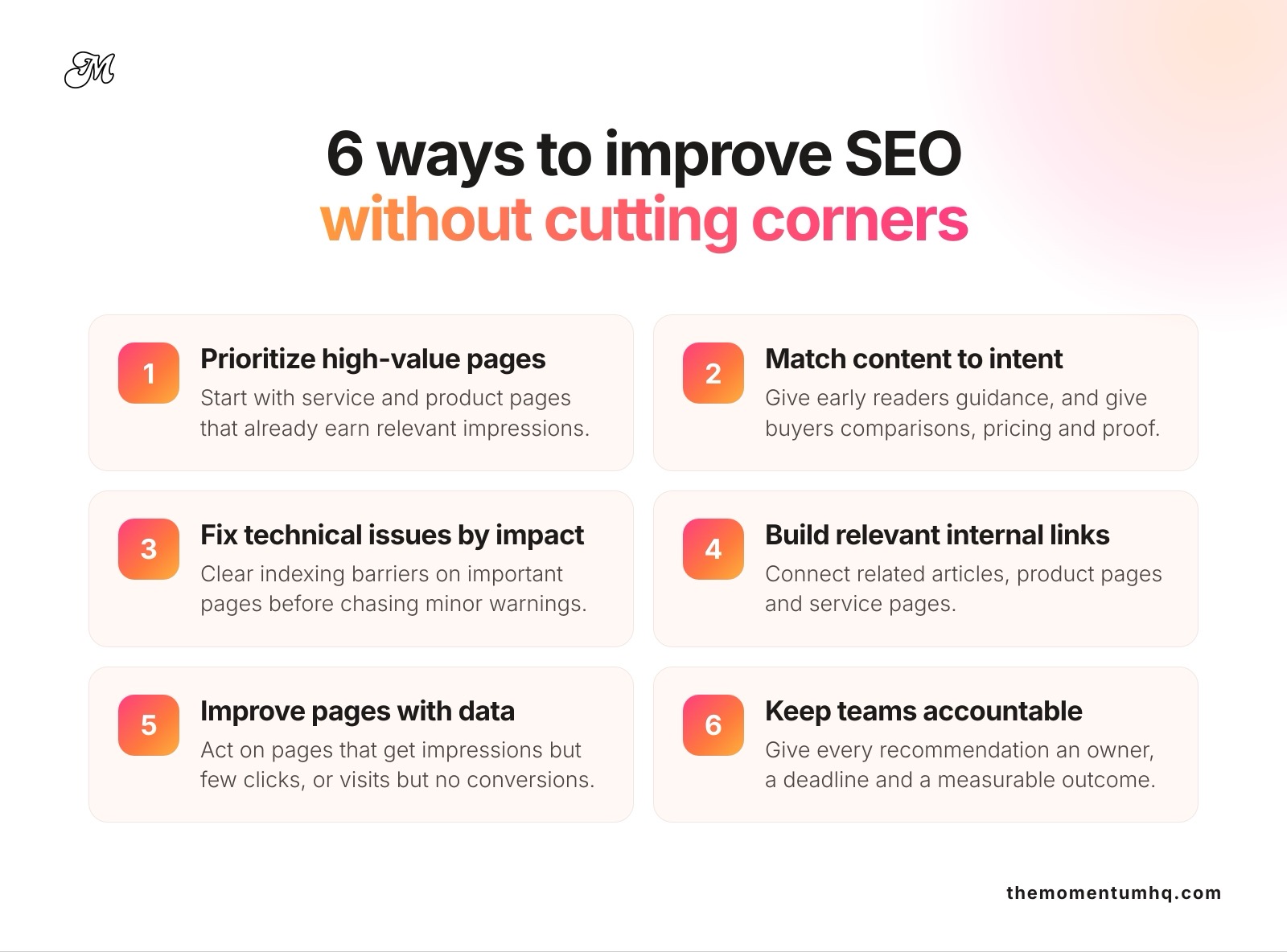
You can improve SEO performance by focusing on high-impact work, creating genuinely useful content, resolving technical barriers, and measuring results consistently. The aim is to reduce wasted effort, not to force rankings through shortcuts.
- Prioritize pages with the greatest business value: Start with important service pages, product pages, and existing articles that already attract relevant impressions. Improving a page with potential can be more efficient than publishing several new articles without a clear purpose.
- Match content to customer intent: Understand what your audience needs at each stage of the buying journey. Early-stage readers may want educational guidance, while potential buyers may need comparisons, pricing information, implementation details, or evidence of results.
- Fix technical issues based on impact: Resolve indexing barriers and structural problems that affect important pages first. Avoid spending excessive time on minor technical warnings while high-value pages remain inaccessible or poorly organized.
- Build relevant internal links: Connect related articles, product pages, and service pages so readers can discover useful information easily. A logical internal linking structure also helps search engines understand how your website's content fits together.
- Improve pages using performance data: Review which pages gain impressions but receive few clicks, which attract visitors but fail to convert, and which relevant queries are close to stronger rankings. Use these patterns to guide improvements instead of making random changes.
- Keep teams accountable for implementation: Give SEO recommendations clear owners, deadlines, and measurable outcomes. Regular reviews between marketing, content, and development teams help prevent small delays from becoming months of lost progress.
Avoid guaranteed-ranking promises, manipulative link schemes, and mass-produced content created primarily to influence search engines.
These tactics can waste resources and create risks without building a durable source of growth. Google's SEO Starter Guide explains the fundamentals of helping search engines understand your content and helping users find useful pages.
Why is your SEO not showing results yet?
If your SEO campaign isn't delivering results, the problem may be related to technical issues, content that doesn't match search intent, or delays in implementing recommendations. Identifying the underlying cause helps you avoid wasting time and budget on activities that do not move your business forward.
1. Technical SEO issues are limiting visibility
Problems such as indexing errors, broken internal links, or poor site structure can prevent search engines from accessing and understanding important pages. Even valuable content may struggle to rank if these barriers remain unresolved.
2. Your content isn't reaching the right audience
Targeting overly competitive keywords or publishing generic content that doesn't address customer needs can limit organic visibility. Even when traffic increases, visitors might notconvert if your content fails to address their questions or buying concerns.
3. SEO recommendations are not being implemented consistently
SEO results can stall when technical fixes are delayed, content updates are inconsistent, or teams do not track performance effectively. Without clear priorities and accountability, even a well-planned strategy may fail to deliver its intended results.
At Momentum, we help businesses identify what is holding their organic growth back and turn SEO insights into actionable improvements. Our approach focuses on understanding your website, audience, and business objectives before prioritizing the work that can make the greatest difference.
FAQs
Can SEO work in 30 days?
Yes, some SEO improvements can produce early results within 30 days, particularly when they address clear technical problems or improve existing pages. However, meaningful traffic growth and business results usually require more time.
How long does it take to rank on Google's first page?
There is no fixed timeline for reaching Google's first page. Some lower-competition keywords may improve within a few months, while competitive commercial terms can take considerably longer. Your website's history, content quality, competition, and implementation speed all influence the outcome.
Does SEO take longer for a new website?
SEO often takes longer for a new website because it has less existing content, fewer established links, and limited search performance history. A clear site structure, technically accessible pages, useful content, and consistent optimization can help build visibility, but results still depend on competition and execution.
How long should you wait before changing your SEO strategy?
Give individual SEO changes enough time to be discovered and evaluated before deciding whether they worked. Review performance regularly, investigate persistent problems, and adjust the strategy when the data indicates that your targeting, content, or implementation needs improvement.
Is SEO worth the investment if results take months?
SEO can be worth the investment when it attracts relevant visitors, supports lead generation, and contributes to long-term business goals. Unlike paid advertising, useful organic content can continue attracting search traffic after publication, although it requires ongoing maintenance and investment.
Final thoughts
SEO takes time because search engines need to discover and evaluate your pages, while your business needs time to implement improvements and turn visibility into meaningful results. For many businesses, the first few months are about building a strong foundation, with clearer performance trends emerging over the following months. However, no timeline guarantees rankings or revenue.
Rather than relying on quick fixes or guaranteed-ranking promises, Momentum focuses on building a sustainable SEO strategy that supports measurable business growth. If your SEO investment isn't delivering the results you expected, explore our performance intelligence to make more informed, data-driven marketing decisions.